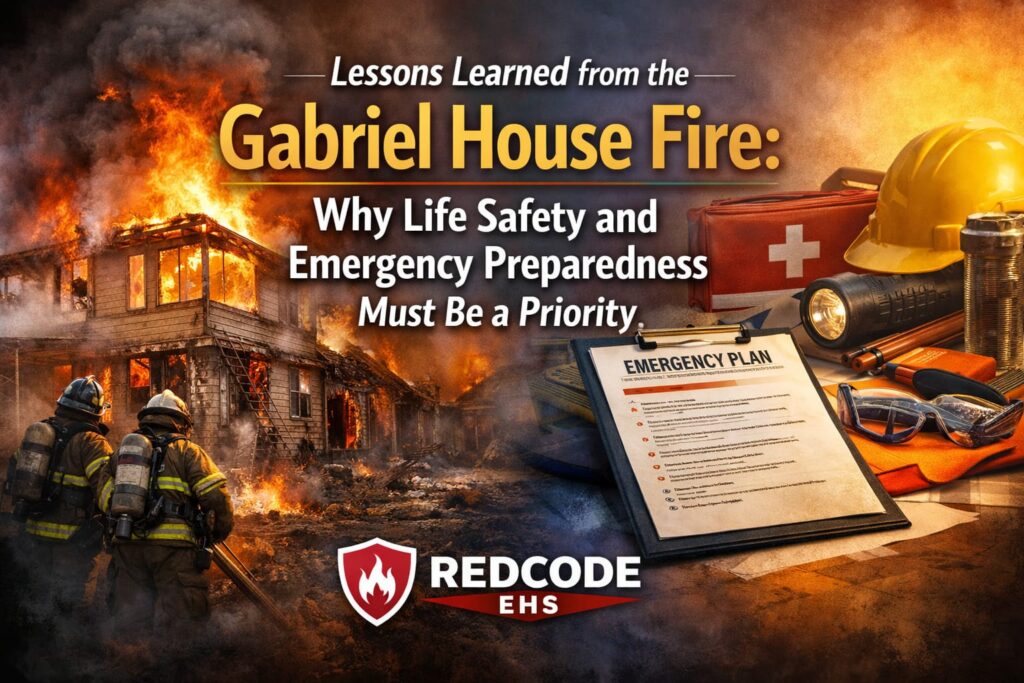
The Massachusetts Assisted Living Residences (ALR) Commission Report issued in response to the tragic Gabriel House Fire serves as a powerful reminder of the devastating consequences of inadequate life safety and emergency preparedness systems. The report identified serious deficiencies in fire protection systems, emergency planning, staff readiness, and regulatory oversight—factors that collectively contributed to the tragic loss of life.
This incident reinforces a critical truth for healthcare and residential care facilities across the United States: emergency preparedness is not optional—it is a core component of effective EHS services in the USA.
Why Emergency Preparedness Is Critical for Assisted Living & Nursing Homes
Assisted Living Residences and Nursing Homes face unique challenges during emergencies. Residents often have mobility limitations, cognitive impairments, or medical dependencies that require highly coordinated response plans, properly maintained life safety systems, and well-trained staff.
Without a proactive Environmental, Health, and Safety (EHS) framework in place, even a minor incident can escalate into a catastrophic event.
Key Lessons Learned from the Gabriel House Fire
The Gabriel House Fire highlights critical gaps that facilities must urgently address through comprehensive EHS services and safety audit readiness programs in the USA:
- Emergency response plans must be current, tested, and facility-specific
- Fire and life safety systems must be properly designed, maintained, and continuously monitored
- Staff must receive regular, role-based emergency and fire safety training
- Compliance must be proactive, continuous, and risk-based—not reactive or checklist-driven
Facilities that fail to integrate these elements into their EHS programs expose residents, staff, and leadership to unacceptable levels of risk.
Why EHS Services Matter for Assisted Living & Nursing Homes in the USA
A robust EHS service in the USA goes far beyond basic compliance. It ensures that life safety, emergency preparedness, and regulatory readiness are embedded into daily operations.
This includes ongoing risk assessments, fire system coordination, staff competency development, and readiness for unannounced surveys by CMS, state health departments, and accrediting organizations.
How REDCODE EHS Supports Assisted Living & Nursing Homes
REDCODE EHS delivers specialized EHS services and safety audit readiness services in the USA tailored specifically for Assisted Living Residences and Nursing Homes.
Our Chief Life & Fire Safety Consultant—bringing over 17 years of experience, a graduate degree in Emergency Management (MSEM), and industry-leading certifications (CSP, CHMM, CHFM, FPPM)—is personally assigned to your facility to ensure consistent compliance and life safety excellence.
Our EHS & Safety Audit Readiness Services Include
- Fire & Life Safety Program Management
- Fire Response Plans & Shelter-in-Place Planning
- Hazard Vulnerability Assessments (HVA)
- Emergency Preparedness & Response Planning
- Regulatory Compliance & Survey Readiness Support
- Life Safety Risk Assessments & Gap Analysis
- Fire Safety System Reviews & Coordination
- Staff Training, Emergency Drills & Competency Programs
- Policy & Procedure Development
- Ongoing EHS Compliance Monitoring and Support
Building Resilient Care Environments Through EHS Excellence
At REDCODE EHS, our approach goes beyond meeting minimum regulatory requirements. We help organizations build resilient, sustainable EHS systems that actively protect lives and reduce operational risk.
Preparedness saves lives. Prevention protects communities.
If your facility is ready to strengthen its EHS service framework, life safety programs, and safety audit readiness in the USA, REDCODE EHS is here to help.